


One Shot Soccer: Swipe & Score
World Sports Arena
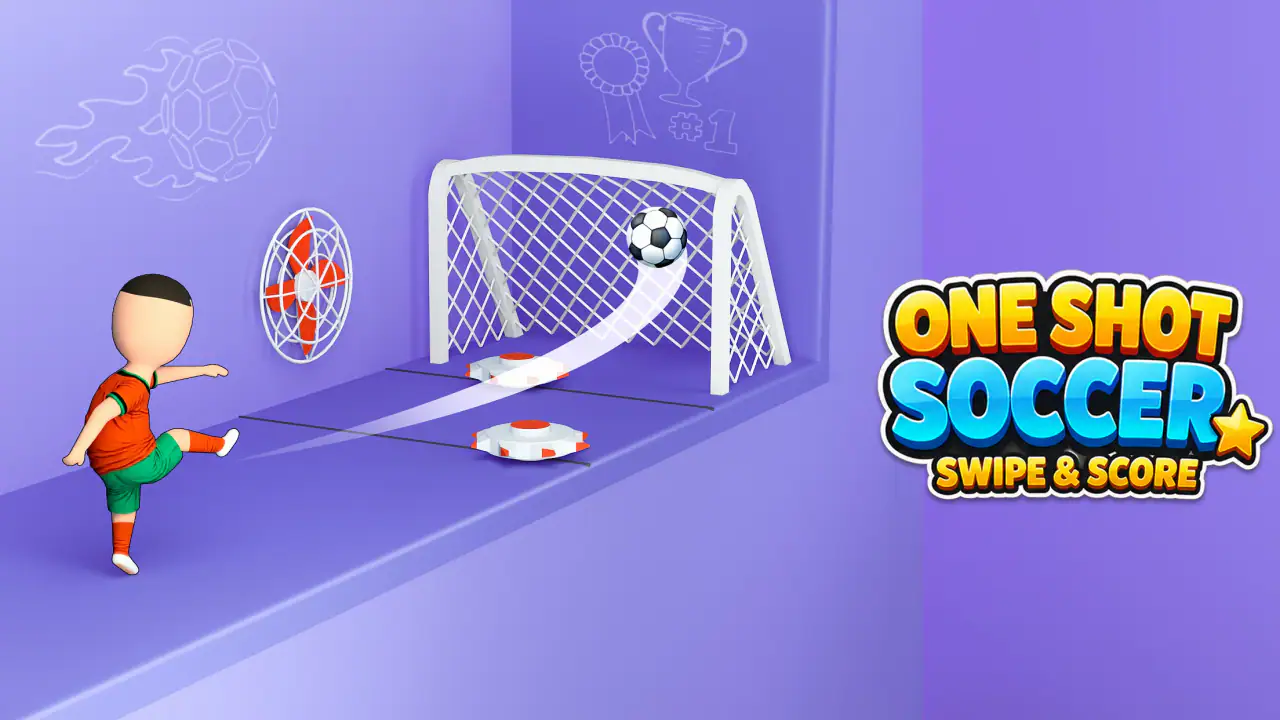
One Shot Soccer is the kind of sports game I reach for when I want a quick challenge rather than a full football simulation. Its entire appeal is built around the pressure of making one accurate attempt, and that narrow focus gives it a clear identity. I found it easy to understand within moments, but not so mindless that every round felt identical. The central question is simple: can I read the situation, commit to a shot, and live with the result?
That simplicity is also the game’s biggest strength and its main limitation. One Shot Soccer: Swipe & Score is not trying to replace a traditional football title with teams, long matches, detailed tactics, or a large career mode. It belongs to the lighter side of the sports category, where a short session fits into a queue, a commute, or a few spare minutes between tasks. If you enjoy compact skill games, I think it has a convincing reason to stay installed. If you want complete control over a football match, you will probably outgrow it quickly.
Why the one-shot idea works
The developer, World Sports Arena, has chosen a focused design instead of piling on systems. That matters because the game’s best moments come from the decision immediately before the shot. I am not spending time arranging a formation or learning a large control scheme. I am concentrating on timing, direction, and whether I can repeat a successful action without becoming careless.
That makes the game approachable for people who normally avoid sports games. Someone who does not know football tactics can still understand the objective, while experienced players can look for consistency and precision. The learning curve is gentle at the beginning, but the challenge comes from trying to turn a lucky success into a reliable skill. I enjoyed that distinction: getting one shot right is satisfying, but reproducing the same quality under pressure is where the game earns its keep.
The short-session format is particularly useful in everyday situations. I can imagine opening it while waiting for a friend who is running late, playing a few attempts, and closing it without feeling that I have abandoned an unfinished match. It also works well when I want something interactive but do not have the attention for a long strategy game. There is no need to reserve a large block of time for it, which is a practical advantage over many conventional football games.
Related News





The controls are the heart of the experience, so I pay more attention to how an attempt feels than I would in a broader sports title. A swipe-based action should feel immediate, and the game is most enjoyable when my input seems connected to the result. I found myself adjusting small habits: using a shorter movement when I wanted control, slowing down instead of making a hurried gesture, and treating each attempt as information rather than simply a win-or-lose moment.
The most useful mindset is to treat every miss as feedback, not as wasted play. A rushed swipe tells me that I was impatient; an overconfident attempt reminds me that repeating a previous motion does not guarantee the same outcome. This is a subtle strength because the game encourages improvement without requiring a complicated tutorial or a football background.
Small decisions make short sessions worthwhile
One of the less obvious pleasures is how quickly the game exposes careless habits. In a larger football game, a mistake can disappear inside a long match. Here, the shot is the event, so there is nowhere for poor timing to hide. That makes it useful as a compact test of concentration. I can play casually, but I can also set myself a personal goal of making cleaner attempts rather than simply chasing a fast result.
Gallery
I recommend playing with a consistent posture and holding the phone in the same way from attempt to attempt. That sounds minor, but touch games can feel inconsistent when I change grip, switch hands, or swipe from a different angle. Keeping the phone steady makes it easier to tell whether a miss came from my technique or from an unexpected movement. This is the kind of practical adjustment that a short store description would never explain, yet it can make the game feel much fairer.
Another useful approach is to avoid playing every attempt at maximum speed. The temptation in a quick sports game is to swipe immediately, especially after a successful shot. I found better results when I paused briefly, looked at the situation, and made one deliberate movement. That pause also makes the game less tiring during longer sessions. The title may be built around one shot, but the real challenge is learning when not to rush it.
I also like that the basic concept leaves room for different kinds of players. A casual player can enjoy the instant feedback and stop after a few attempts. A more competitive-minded player can focus on streaks, accuracy, or simply reducing unforced errors. Since the action is so concentrated, improvement is easy to notice personally even when I am not comparing myself with anyone else.
Where it falls short
The same focus that makes One Shot Soccer accessible can make it feel limited. After the novelty of the central mechanic settles, players who need variety may start looking for more. A full football game offers match flow, passing, defending, team selection, and tactical decisions. This title gives the shot most of the attention, so it cannot provide the emotional arc of building an attack or rescuing a match in the final moments.
That is not a flaw in execution so much as a question of expectations. I would not install it expecting a miniature console football experience. The game is better understood as a precision sports challenge with a football theme. If I approach it that way, the compact design feels intentional. If I expect a deep roster, extensive management, or long-form progression, the narrow scope becomes noticeable very quickly.
There is also a risk of repetition. Because the core action is so focused, the game depends heavily on whether I enjoy refining the same basic skill. Players who love mastery can find that satisfying, while others may feel that they have seen the main idea after a short session. I would especially hesitate to recommend it to someone who needs frequent new mechanics to stay interested.
The controls can create another point of friction. Touch gestures are convenient, but they are not as precise as a physical controller, and small differences in finger speed or starting position can affect confidence. When I miss, I sometimes want more immediate explanation of what went wrong. A dedicated football game may offer clearer control feedback through buttons, analog movement, or replay tools. Here, part of the learning process is interpreting the result for myself.
That uncertainty can be enjoyable, but it also means the game is not ideal for players who dislike trial and error. I prefer it when I am in a patient mood. When I am tired or distracted, a miss can feel less like a lesson and more like an interruption. My recommendation is to play in short bursts and stop when concentration drops; continuing mechanically does not make the experience better.
How it compares with ordinary football games
Compared with a traditional mobile football game, One Shot Soccer is dramatically easier to pick up. There is no need to remember a collection of buttons, learn player roles, or manage an entire match. That makes it a better choice for a quick break and a worse choice for anyone who wants to feel responsible for every phase of play.
Compared with other simple arcade sports games, its advantage is clarity. The premise is immediately understandable, and the football theme gives the action a recognizable sense of pressure. Its disadvantage is that the focused format leaves less room for surprise. An arcade title with several sports or modes may offer more variety, while this game asks whether the satisfaction of improving one action is enough for you.
I would also choose it over a larger football game when I have limited storage attention rather than necessarily limited phone space: I do not want to commit mentally to a full match, follow a season, or deal with a long progression loop. On the other hand, I would choose a conventional football title when I want a story to a match, meaningful team decisions, or a sense that my performance affects more than one isolated attempt.
A useful way to decide is to ask what kind of failure you enjoy. In this game, failure is immediate and personal. I made the shot, so I own the mistake. In a team-based football game, a missed chance is only one part of a larger contest. One Shot Soccer suits players who like direct responsibility and quick retries; a broader alternative suits players who prefer context, recovery, and changing momentum.
Who should install it
I think the strongest audience is anyone who enjoys skill-based mobile games but wants a sports setting. It is a good fit for football fans who appreciate the drama of finishing an attack, even if they do not need a complete simulation. It also suits casual players looking for an uncomplicated game that can be understood without reading a long manual.
It is appropriate for a wide family audience as well. The content rating is Everyone, and the straightforward premise makes it easy to hand to a younger player or a relative who rarely plays games. I would still suggest showing a new player the basic gesture and then letting them experiment. The fun comes from discovering a comfortable motion, not from being overwhelmed by instructions.
The game is free, which lowers the barrier to trying it. I appreciate that because this is a focused experience: people should be able to decide for themselves whether repeated shot practice is enjoyable before committing to it as a regular game. Its audience reach is already substantial, with over 500 thousand installs, and the average rating stands at 4.7 from around 1.7 thousand ratings. Those figures suggest that the concise format is connecting with a meaningful group of players, though they do not change the fact that individual tolerance for repetition will decide whether it lasts.
On the technical side, the listed minimum operating system is Android 7.1, while the current version is 1.5. That makes it relevant to people using older compatible Android devices, not only recent phones. I would still judge the experience by the quality of touch response on the particular device, because a demanding swipe challenge is more sensitive to screen feel than a turn-based game.
I would skip it if your main reason for downloading a football game is team management, realistic match structure, or a large amount of content to explore. I would also skip it if you dislike games that ask you to repeat a small action until your technique improves. There is no shame in that preference; the whole point of this title is concentration around a single decisive moment.
Practical ways to get more from it
My first tip is to use a short practice routine rather than playing until frustration builds. Start with several calm attempts, notice whether your misses are too early, too strong, or poorly directed, and then change only one part of your movement. Changing everything at once makes it impossible to learn. This approach turns a few minutes into a genuine skill session instead of a string of random swipes.
My second tip is to separate experimentation from scoring. Try a different gesture when you are curious, but do not change your technique in the middle of a focused run just because one attempt went badly. A single miss may be an accident. A pattern across several attempts is more useful evidence. This distinction helped me avoid abandoning a reliable motion too quickly.
My third tip is to use the game as a reset between demanding tasks, not as background entertainment while multitasking. Because the shot requires a deliberate input, divided attention makes the experience feel harsher. When I give it even a small amount of focus, the game becomes a compact concentration exercise. When I play while watching something else, the result is mostly careless failure.
For a shared session, I would pass the phone around and let each person take a few attempts rather than creating a long tournament with complicated rules. The game’s immediacy makes it naturally social, but its simplicity means the group needs to supply the extra challenge. A friendly rule such as “one careful attempt each” keeps the focus on composure instead of turning the session into frantic tapping.
My final view
One Shot Soccer: Swipe & Score succeeds because it understands what it wants to be. It is a compact sports game about the pressure and satisfaction of one attempt, not a replacement for a full football simulation. I found its direct controls and quick sessions genuinely appealing, especially when I wanted a game that could start and stop without ceremony.
Its limitations are equally clear. The narrow concept can become repetitive, touch input may leave some misses open to interpretation, and players looking for team depth will find very little here to satisfy that appetite. Those are important trade-offs, not details to overlook.
For me, the recommendation is specific: install it if you enjoy refining a simple gesture, want football-flavored action in short bursts, and are comfortable creating your own goals for improvement. Choose a larger football game instead if you want tactics, long matches, or a deeper sense of progression. Within its smaller lane, World Sports Arena has made a focused and approachable sports challenge. If the appeal of a perfect single attempt sounds better than managing an entire match, this is worth trying.
FAQs for One Shot Soccer: Swipe & Score
What is One Shot Soccer: Swipe & Score?
One Shot Soccer: Swipe & Score is a casual mobile football game built around quick, skill-based attempts on goal. Instead of managing a full team or playing long matches, you control the shot by swiping on the screen and trying to beat the goalkeeper. Its simple controls make it easy to start, while timing, swipe direction, and shot placement add enough challenge to keep repeated attempts interesting.
How do you play One Shot Soccer: Swipe & Score?
The main gameplay is based on swiping to direct and power your shot. You generally need to read the goalkeeper’s position, choose an open area of the goal, and perform a controlled swipe rather than moving through complicated menus or button combinations. Each attempt is short, so the game works well for quick sessions, although improving your accuracy may require practice and careful timing.
Is One Shot Soccer: Swipe & Score free to download and play?
One Shot Soccer: Swipe & Score is presented as a free-to-download mobile game, allowing players to try its core shooting experience without purchasing the app upfront. However, availability of advertisements, optional purchases, extra content, or other monetization features can vary by device version and region. It is worth checking the store listing before downloading if you want to understand possible costs.
Does One Shot Soccer: Swipe & Score require an internet connection?
The basic swipe-and-score concept is suited to offline play, particularly when you only want to practice shots or complete simple attempts. Nevertheless, some features may depend on an internet connection, including advertising, online rankings, cloud-related services, updates, or promotional content. If offline access is important to you, test the game after temporarily disabling mobile data and Wi-Fi.
Is One Shot Soccer: Swipe & Score suitable for children and casual players?
The game is generally approachable for casual players because its central mechanic is easy to understand and does not require knowledge of complex football tactics. Short rounds can also suit children and anyone looking for a quick distraction. Parents should still review the current age rating, advertising, in-app purchase information, and privacy details shown on the relevant Android or iOS store page before installation.
Pros
- Simple swipe controls make shooting easy to learn.
- Quick matches fit short gaming sessions.
- Physics-based shots add variety to each attempt.
- Works well for casual
- pick-up-and-play entertainment.
- Progression encourages players to improve their accuracy.
Cons
- Gameplay can feel repetitive after extended sessions.
- Precision may be difficult on smaller phone screens.
- Some challenges rely heavily on timing and luck.
- Ads may interrupt the experience for free players.
- Limited depth may not satisfy serious football fans.


